In short
With an instant camera, the darkroom lives inside the film: after you press the shutter, the camera pushes out the print, and the chemistry in it develops the image in front of your eyes. Each shot exists exactly once, as a one-off you can hold.
Polaroid's first instant camera was the Land Camera Model 95 from 1948. As the Science Museum puts it, it packed the chemistry of a darkroom into a hand-held camera (Science Museum Group). A well-known range today is Fujifilm's Instax, sold since around 1999. Instax film comes in Mini (46 × 62 mm), Square (62 × 62 mm) and Wide (62 × 99 mm), and a print takes about a minute and a half to fully develop (FotoWissen, in German).
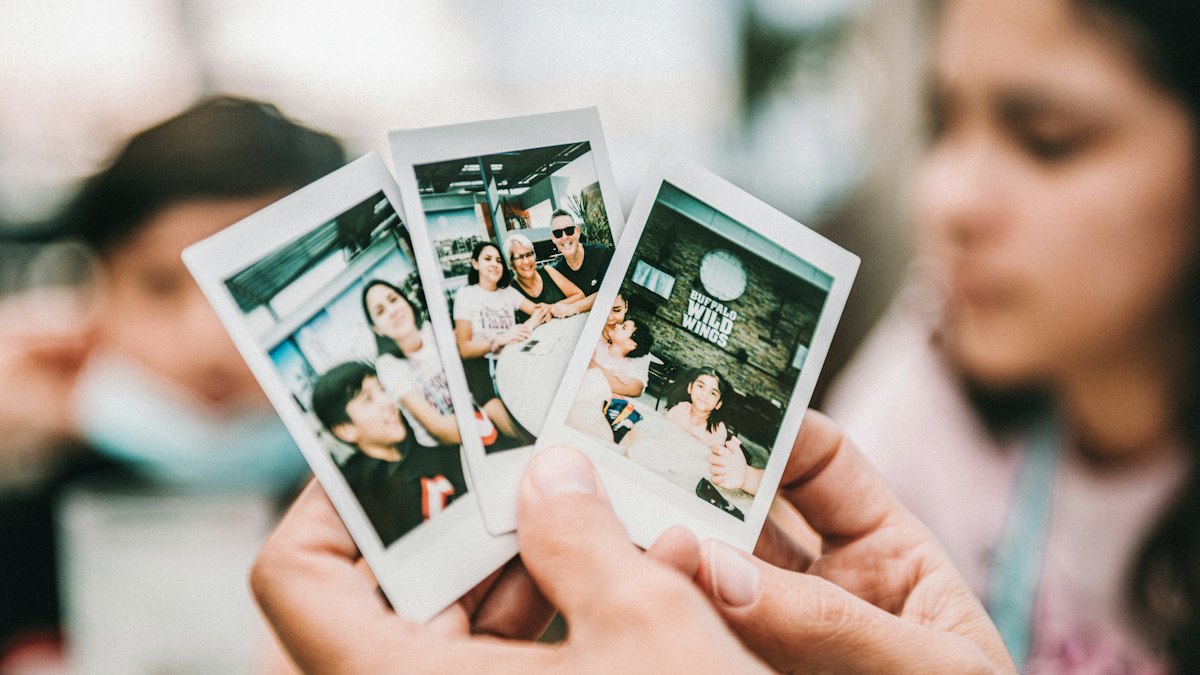 Photo: Tim Mossholder / Unsplash
Example
At a 30th birthday party, an instant camera sits next to the guest book. Each group snaps a picture of themselves, watches the print slowly come to life, sticks it in the book and writes a few lines next to it. By the end of the night, the birthday girl has a finished memory book. The catch: the last film pack ran out at 11 p.m., so there isn't a single picture from the dance floor.
What to watch out for
- Cost per shot: Every print uses film you have to buy. Bring enough packs, or decide what the camera is for.
- One copy only: Each instant photo exists once. Whoever takes it home has it; nobody else does. If you want digital copies, you'll need to scan or photograph the prints later.
- Light: In dark rooms the camera relies on its flash, so close-up subjects usually work best.
- Supervision: A camera that wanders around the room empties fast. A fixed station, for example at the guest book, keeps things under control.
For other ways to gather your guests' pictures, see our guide on how to collect photos from guests.