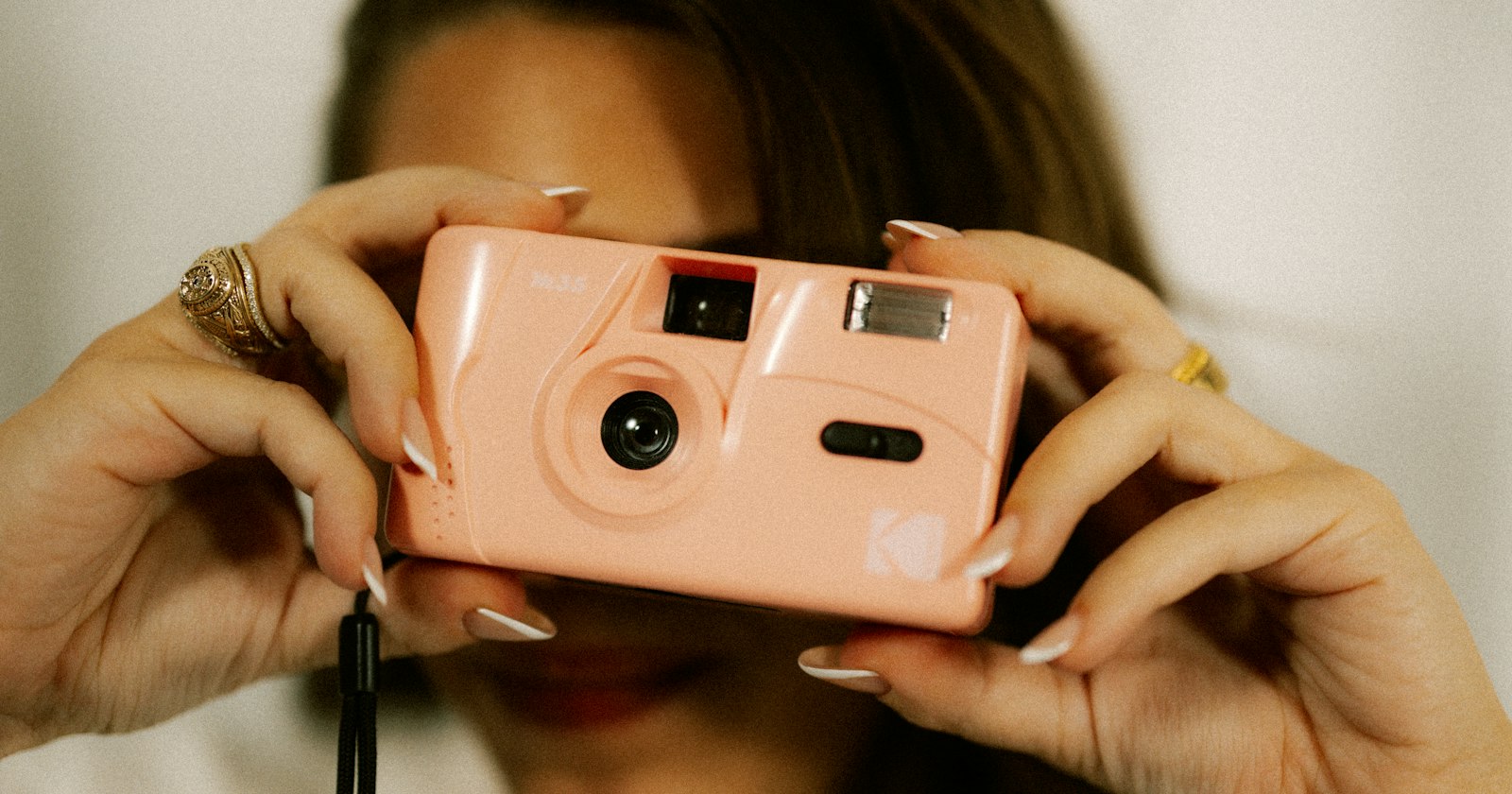
In short
With a disposable camera you never load film yourself: the roll is already inside, and after the last shot the whole camera goes to the photo lab. There is almost nothing to set, as these cameras use fixed focus and a built-in flash. There is no screen either, so nobody sees what they've taken until the film is developed.
One of the first was Fujifilm's QuickSnap, launched in Japan in July 1986 as "Utsurundesu", using 110 film at ISO 100. Fujifilm later made 27 exposures its standard, and the film got faster over the years, up to ISO 1600 (Fujifilm QuickSnap history). Disposables are still popular at weddings and parties because they produce spontaneous, unposed pictures.
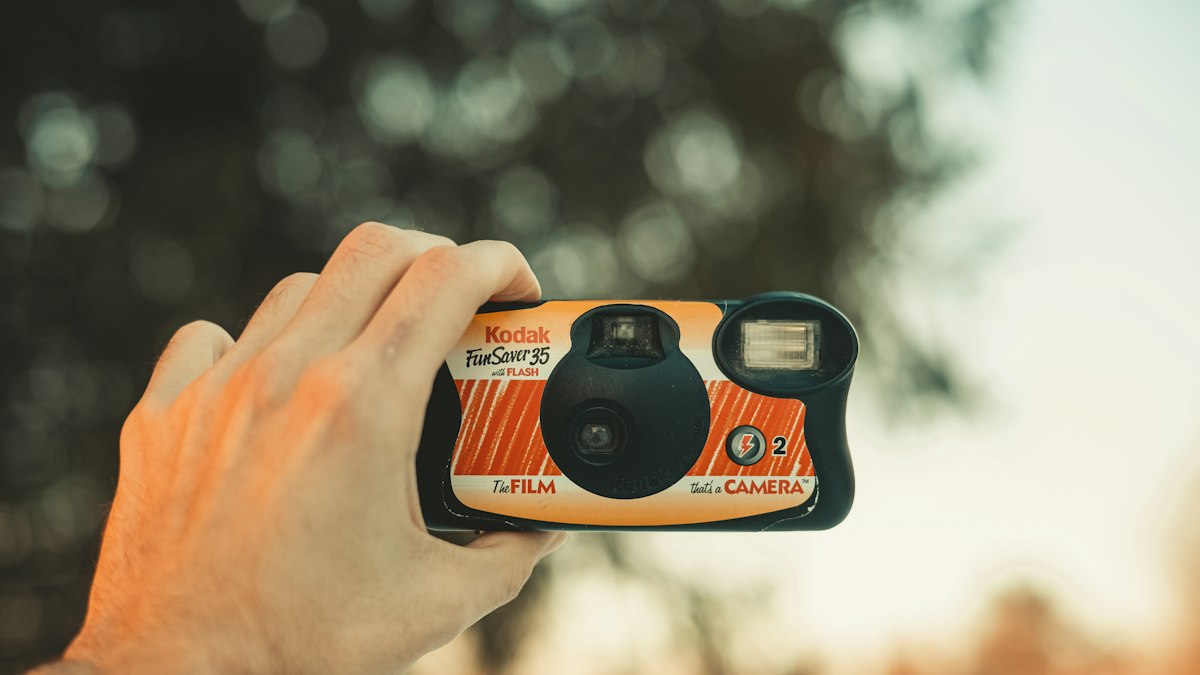 Photo: Mark Bishop / Unsplash
Example
A couple puts a disposable camera on each of their ten reception tables. The college friends' table finishes its roll before dinner is served, while the grandparents' camera sits untouched next to the flowers all night. One camera ends up in someone's handbag and is never seen again. The next day the maid of honour collects the rest and drops them at a lab. When the prints come back, everyone loves them, even if some of the dance-floor shots came out very dark.
What to watch out for
- Cost: You pay for every camera and then again for developing. With lots of tables, that adds up.
- Shared cameras: One camera per table means several guests share one roll, and whoever grabs it first often uses up most of the shots.
- Light: With a small flash and fast film, pictures in dark rooms quickly turn grainy or blurry; see film grain.
- Collection: Decide who gathers the cameras at the end and takes them to the lab.
- Waste: Once developed, you're left with plastic camera bodies.
For a side-by-side look at analog and digital, see our comparison disposable camera or app. Wedding-specific tips are in our post on the disposable camera at weddings.
With Filmriss
Filmriss brings the same idea to phones: each guest has their own roll with a limited number of shots, and the photos stay hidden until the next morning. There are no cameras to buy, collect or develop; a QR code is all you need.