In short
A save the date is a short card, email or message that tells guests when and roughly where a celebration will happen – long before the actual invitation arrives. It is most common for weddings, but works just as well for milestone birthdays, reunions or company anniversaries. The whole point is to stop guests from booking something else for that weekend.
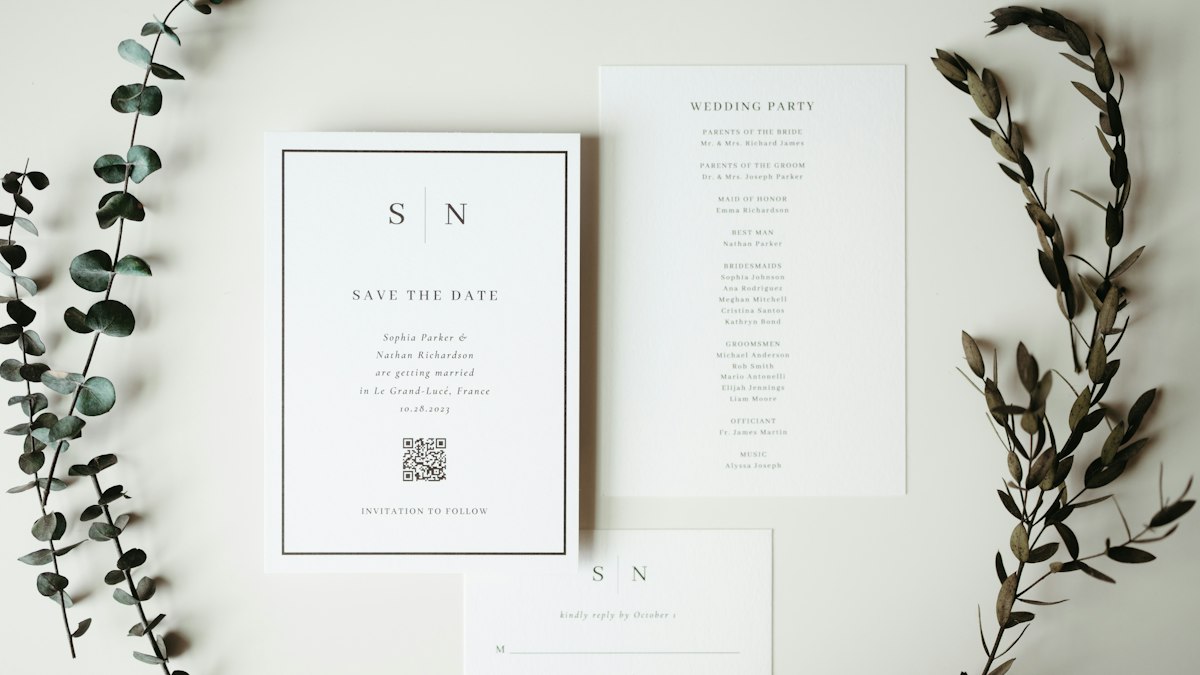 Photo: Micah & Sammie Chaffin / Unsplash
A save the date needs very little: your names, the date and the location. The city or region is enough at this stage – the exact venue can still be open. Add a line saying a formal invitation will follow.
On timing, US wedding site The Knot recommends sending save the dates six to eight months before the wedding, leaning towards eight months for destination weddings or holiday weekends. Earlier than a year out is usually too early, and under four months out a save the date no longer makes much sense (The Knot).
Example
Priya and Sam are getting married in late August in the Lake District. In December they post a simple card with a photo of the lake, their names, "29 August – Ambleside" and "Invitation to follow". Friends in London book the long weekend off straight away; Sam's cousin in Toronto starts watching flight prices. In March the full invitation arrives with times, venue, RSVP deadline and a list of nearby hotels.
What to watch out for
- Only send to people you will invite. A save the date is a promise of an invitation, so finalise the guest list first.
- Lock the date before you send. Wait until the ceremony and venue are confirmed – moving a date after save the dates are out causes confusion.
- Keep it short. Names, date, place, "invitation to follow". Everything else belongs on the invitation.
- Paper or digital both work. Email is quick and cheap; a printed card tends to stay on the fridge.
- Set the visual tone. Many couples reuse the same photo or design on the invitation and place cards. If you plan to collect guest photos via a QR code, see QR codes for wedding photos.