Wedding Without a Photographer: How to Pull It Off
Getting married without a wedding photographer and still ending up with photos you love: budget alternatives, a must-have shot list, a briefing for the friend behind the camera and a backup plan for when things go wrong.
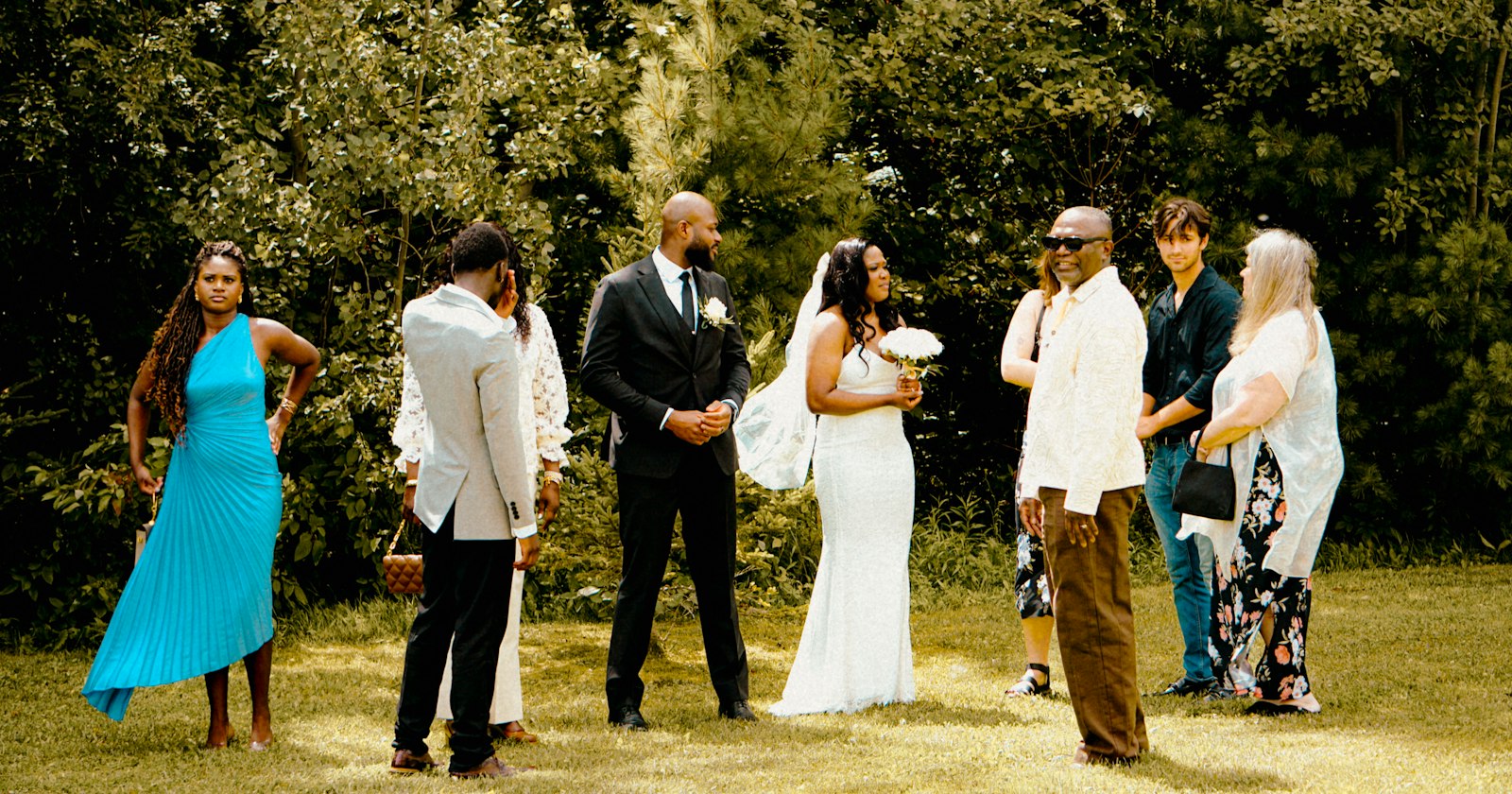
A wedding photographer is one of the biggest lines in the budget. In the UK, Bridebook puts the national average at £1,484, with most couples paying between £500 and £2,500 (Bridebook, as of October 2026). For a micro wedding, a registry office ceremony or a backyard party, that can be more than you want to spend – or simply not the kind of day you have in mind.
The good news: every wedding already has dozens of cameras in the room, in your guests' pockets. To turn them into real memories instead of 300 photos scattered across 40 group chats, you need a plan. Here it is: budget alternatives, the shots you can't skip, a briefing for the friend behind the camera, and a backup plan.
Can you get married without a photographer?
Yes. No registry office or church requires one, and plenty of couples skip it on purpose. To be fair, a good pro delivers things guests rarely manage: calm portraits in the best light, full coverage of the ceremony and a beautifully edited gallery.
Without a photographer you trade that polish for something else: more budget for food, venue or honeymoon, no portrait session eating into your day, and often more honest pictures. Guests photograph what moves them – grandma on the dance floor, the best man halfway through his speech, the kids under the table. Those candid photos are exactly what many professional albums lack.
What you gain
- Budget for other things
- No photo-shoot schedule on the day
- Lots of spontaneous shots from guests
- A more relaxed mood, nobody posing
What you might miss
- Few photos of the two of you
- Weak shots in low light
- No professional editing
- Someone has to organise it
What are the alternatives to a wedding photographer?
| Option | Budget | Strengths | Limits |
|---|---|---|---|
| Pro for the ceremony and group shot only (2–4 hrs) | medium–high | Key moments covered professionally | No pro at the reception |
| Friend with a good camera | low | Knows your people, costs little | Misses the party as a guest |
| Photography student or hobbyist | low–medium | Keen, often has gear | Experience varies, check samples |
| Guest photos via QR code | low | Everyone shoots, many angles | Quality depends on phones and light |
| Photo booth | medium | Fun group shots, often instant prints | Posed photos in one spot only |
| Disposable cameras on tables | low–medium | Film look, fun factor | Developing costs, many misfires |
| Tripod and self-timer | low | Group shot without help | Planned shots only |
Our pick for a small budget is the hybrid: a pro for the ceremony and the big group photo, plus every guest's photos for the rest. Bridebook lists 4–6 hours of coverage in the UK at under £1,000 (Bridebook, as of October 2026), and shorter bookings are often possible – just ask.
Torn between a photo booth and a guest camera? Our comparison photo booth vs. digital disposable camera breaks it down. And if you're thinking of classic disposable cameras on every table, read disposable cameras at a wedding: real costs, downsides & alternatives first.
How do you plan wedding photos without a pro?
Pick your priorities
Which three moments matter most? Usually the vows, the ring exchange and a big group photo. Plan around those.
Choose one person in charge
A friend, cousin or someone from the wedding party covers the planned shots. Ask early, and make it easy for them to say no.
Write a shot list
Ten to fifteen must-have shots are enough. The list below is a good start.
Visit the venue
Where's the best light, where does the group photo fit, where can someone stand during the ceremony without getting in the way?
Block out time
20 minutes for group photos and 15 for couple portraits, ideally in the soft early-evening light.
Set up guest photos
Put a QR code on every table so everyone's pictures land in one place.
Back everything up
Download all photos, save them in two places, and only then start choosing favourites.
Which wedding photos can't you skip?
Print this shot list or send a screenshot to your photographer-for-the-day. Starred shots are must-haves.
Before the ceremony
- Rings, bouquet, invitation (detail shots)
- The couple arriving *
- Guests waiting and greeting each other
Ceremony
- Walking down the aisle *
- Vows and ring exchange *
- Parents' and best friends' faces during the ceremony
- First kiss as a married couple *
- Walking out, congratulations
Group photos
- Everyone together in one big shot *
- The couple with both families *
- The couple with the wedding party
Couple
- Five to ten minutes of portraits in soft evening light *
Reception
- Speeches and the reactions to them
- Cutting the cake *
- First dance *
- A packed dance floor, late-night chaos
Everything else is your guests' job. Small photo challenges like "a photo with someone you met today" fill the gaps on purpose – find 60 prompts in our wedding photo scavenger hunt.
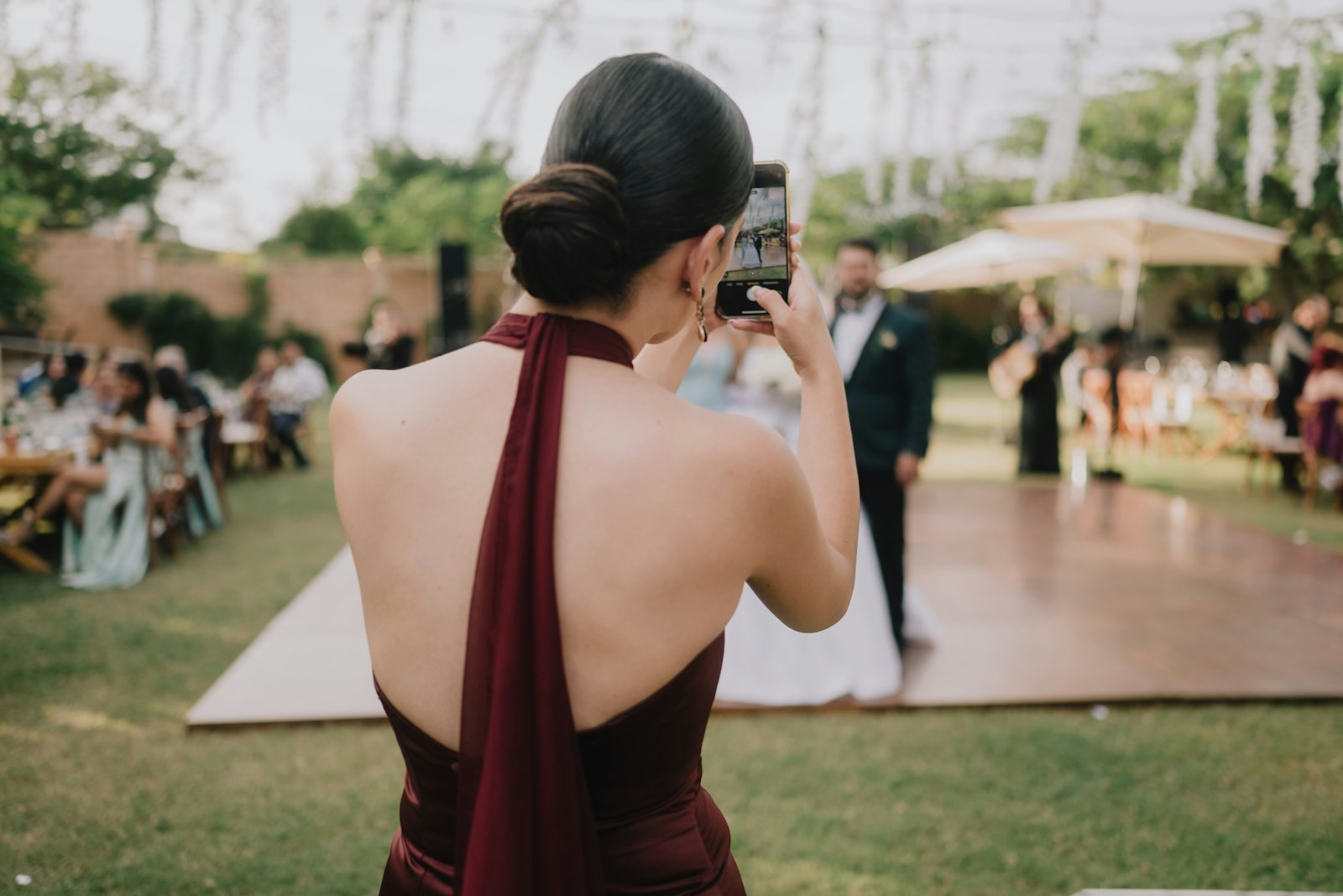
Who should photograph the ceremony and group shot?
The person covering your must-have shots is the key piece. Often it's someone from the wedding party – a best man or maid of honour – or a guest who loves taking pictures. A short briefing helps them get the shots and still enjoy the day:
- Check the rules first. Registry offices and churches set their own rules; some ban flash or only allow photos from one spot. Ask a few weeks ahead.
- Use burst mode for the vows and the kiss. That way at least one frame has nobody blinking.
- Keep the light behind you. Backlight turns faces dark. Indoors, use window light rather than flash.
- Step closer instead of zooming. Digital zoom on a phone costs image quality.
- Off duty after the ceremony. Once the must-haves are done, they're a guest again – everyone else takes over.
For better phone shots in dim reception lighting, see how to take photos in the dark with your phone.
How to take a group photo without a photographer
- Find a raised spot beforehand: stairs, a balcony, a bench.
- Put a phone on a tripod and use the self-timer with burst mode.
- Have someone with a loud voice round everyone up – ideally right after the ceremony, while everyone is still there.
- Tall guests at the back, kids at the front, the couple in the middle.
- Take three or four rounds, and let at least one be silly.
How do you collect everyone's photos?
Without a photographer, guest photos become your real wedding album. To stop them disappearing into group chats and camera rolls, decide in advance where every photo goes. Our guide how to collect photos from wedding guests compares seven ways.
One simple option is a digital disposable camera like Filmriss for your wedding: you create an event and put up a QR code. Guests scan it and take photos straight in the browser, with no app and no account. Each guest has a shot limit that you set, so people think for a second before they shoot and you get fewer throwaway pictures. Nobody sees the photos during the party; they're revealed to everyone the next morning in original quality. Filmriss is free, and photos are deleted automatically after 90 days, so download them in good time.
For tips on designing the code and where to put it, read QR code for wedding photos, and make a card for every table with our QR table card generator.
What about privacy and guests' consent?
Taking photos for your own memories is normal at weddings. It gets more sensitive when pictures go public, for example on Instagram. In the UK and EU, data protection law such as the GDPR can apply when photos of identifiable people are shared, and asking for consent is the safe default.
In practice: tell guests where the photos will end up and who can see them, and ask before posting other people's pictures publicly. Anyone who doesn't want to be photographed should be able to say so without explaining why. This is general information, not legal advice.
What can go wrong, and how do you prevent it?
| Problem | Backup plan |
|---|---|
| Your photographer-for-the-day is ill | A second person knows the shot list |
| Phone battery dies | Power bank in a pocket, a charger at the bar |
| Poor signal at the venue | Test it beforehand, put the Wi-Fi name and password on the table cards |
| Lots of guest photos, none of the couple | Starred shots on the list, portraits fixed in the schedule |
| Photos vanish into chats | One shared place for everything, announced in advance |
| Photos get lost after the wedding | Download everything and store it in two places |
Planning a photo book? Pick your 60 to 100 favourites while you sort. And to get the finished photos to every guest, read how to share wedding photos with guests.
Can you have a wedding without a photographer?
Yes. No registry office or church requires one. The key is to have one person cover the must-have moments, like the vows, ring exchange and group photo, and to collect every guest's photos in one place.
How much does a wedding photographer cost in the UK?
Bridebook puts the UK average at £1,484, with most couples paying between £500 and £2,500. Coverage of 4–6 hours is typically under £1,000 (as of October 2026).
Who takes the photos if you don't hire a photographer?
Usually a friend, family member or someone from the wedding party covers the planned shots, and all the guests add their own phone photos. Some couples also book a pro for the ceremony only.
What are the most important wedding photos?
Walking down the aisle, the vows, the ring exchange, the first kiss, the big group photo, the couple with both families, a few couple portraits, the cake cutting and the first dance.
What's the best way to collect photos from wedding guests?
The easiest way is a QR code on every table that lets guests add photos to one shared place, for example with a digital disposable camera like Filmriss. Alternatives are a shared album or a group chat.
Cover photo: Jay Eshie / Unsplash